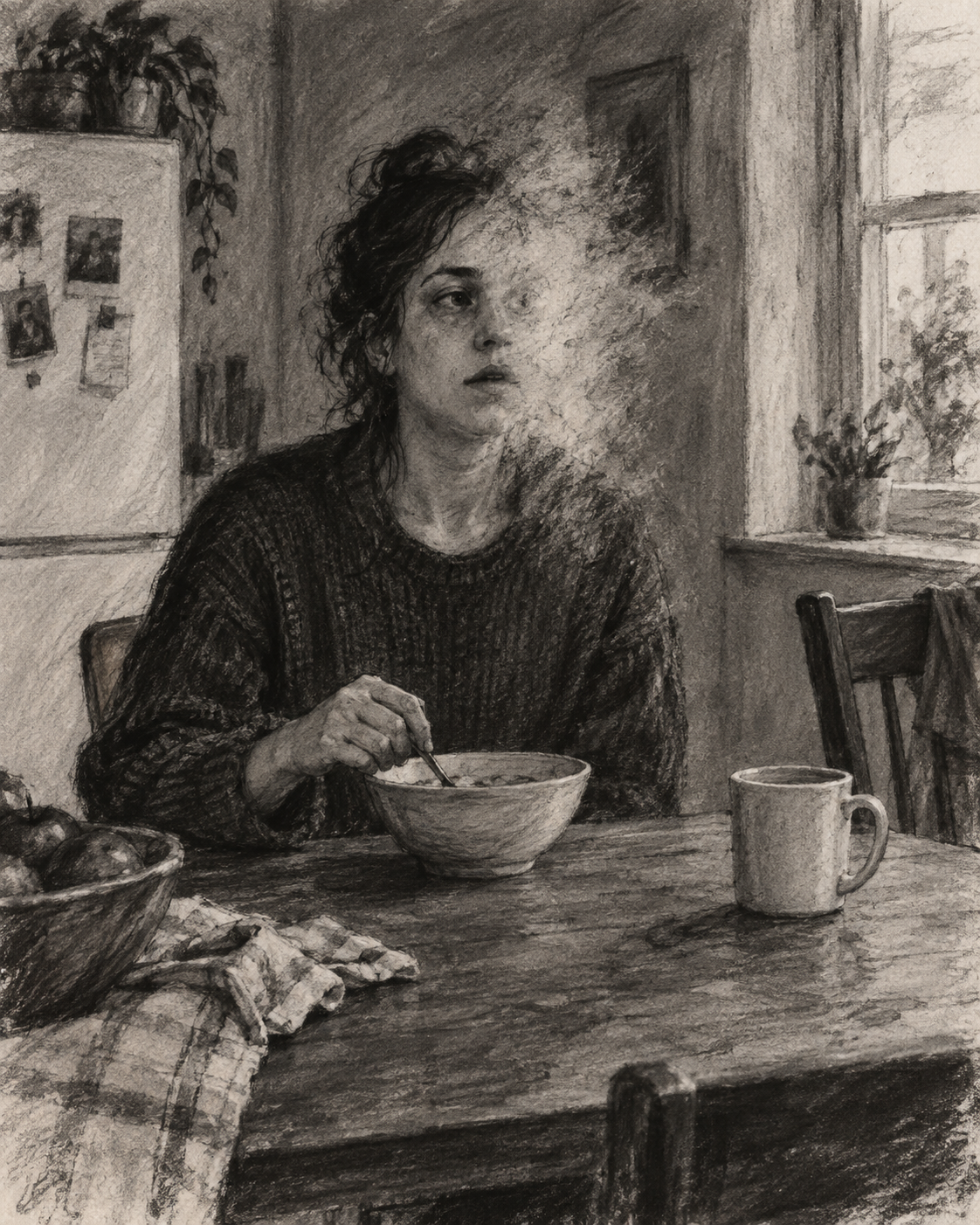
The body can remain present while awareness changes.
This piece reflects focal impaired-awareness seizures, where someone may remain sitting, standing or carrying out an action while awareness and responsiveness are altered.
Original artwork, awareness graphics and posters from Epilepsy: The Untold Side.
The body can remain present while awareness changes.
This piece reflects focal impaired-awareness seizures, where someone may remain sitting, standing or carrying out an action while awareness and responsiveness are altered.
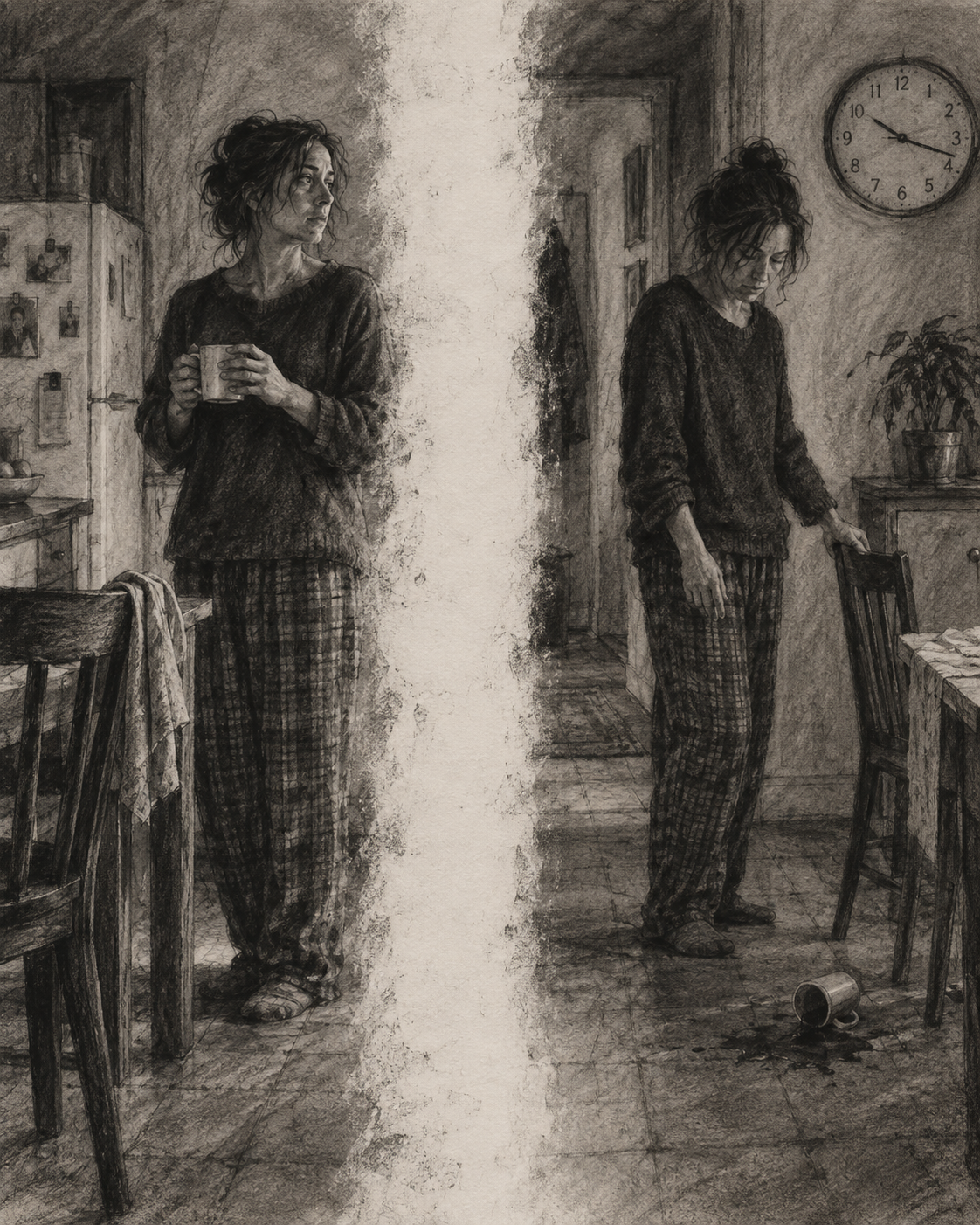
A familiar moment before. A different moment after. What happened in between is simply gone.
This piece reflects the gaps in awareness and memory that can occur with some seizures, when events continue around a person despite part of that time never becoming a memory.
Art & Awareness
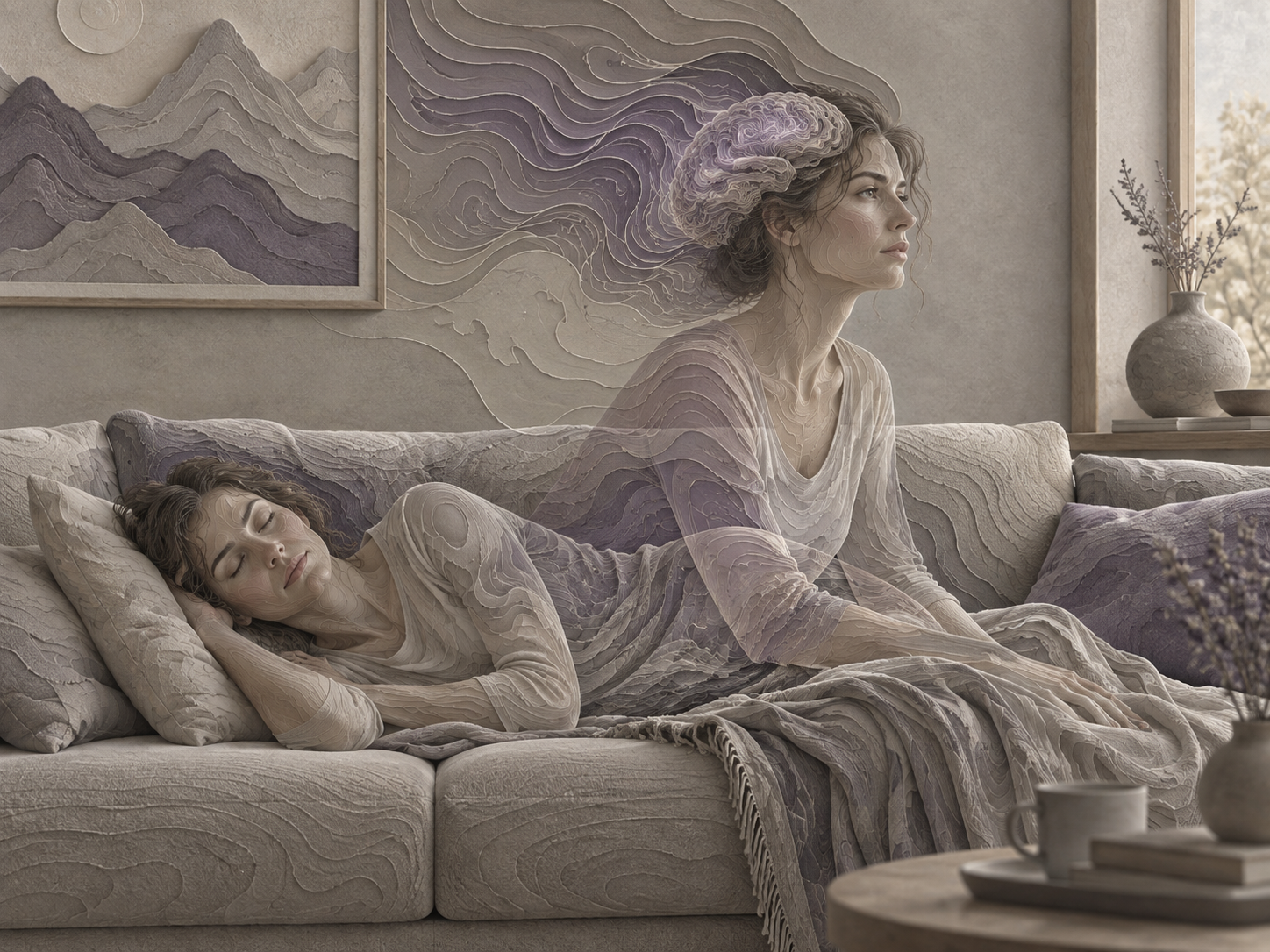
Between Rest and Rising explores the disconnect between a body that appears to be resting and a brain that has not fully switched off.
A woman is shown in two states at once: lying on the sofa while also appearing to sit upright. The overlapping forms are intentional. They represent the strange divide that can exist when the body is doing one thing while activity within the brain follows another course.
Topographic contours move through the figure and surrounding space like an internal landscape. They suggest layers, pathways and activity that cannot be seen from the outside.
This is not a literal depiction of one seizure type or a medical diagram. It is an awareness piece about hidden neurological activity, altered states and the distance between what another person can see and what may be happening internally.
Medium: Topographic relief-style digital artwork.
Theme: Hidden activity, altered state, body and brain.
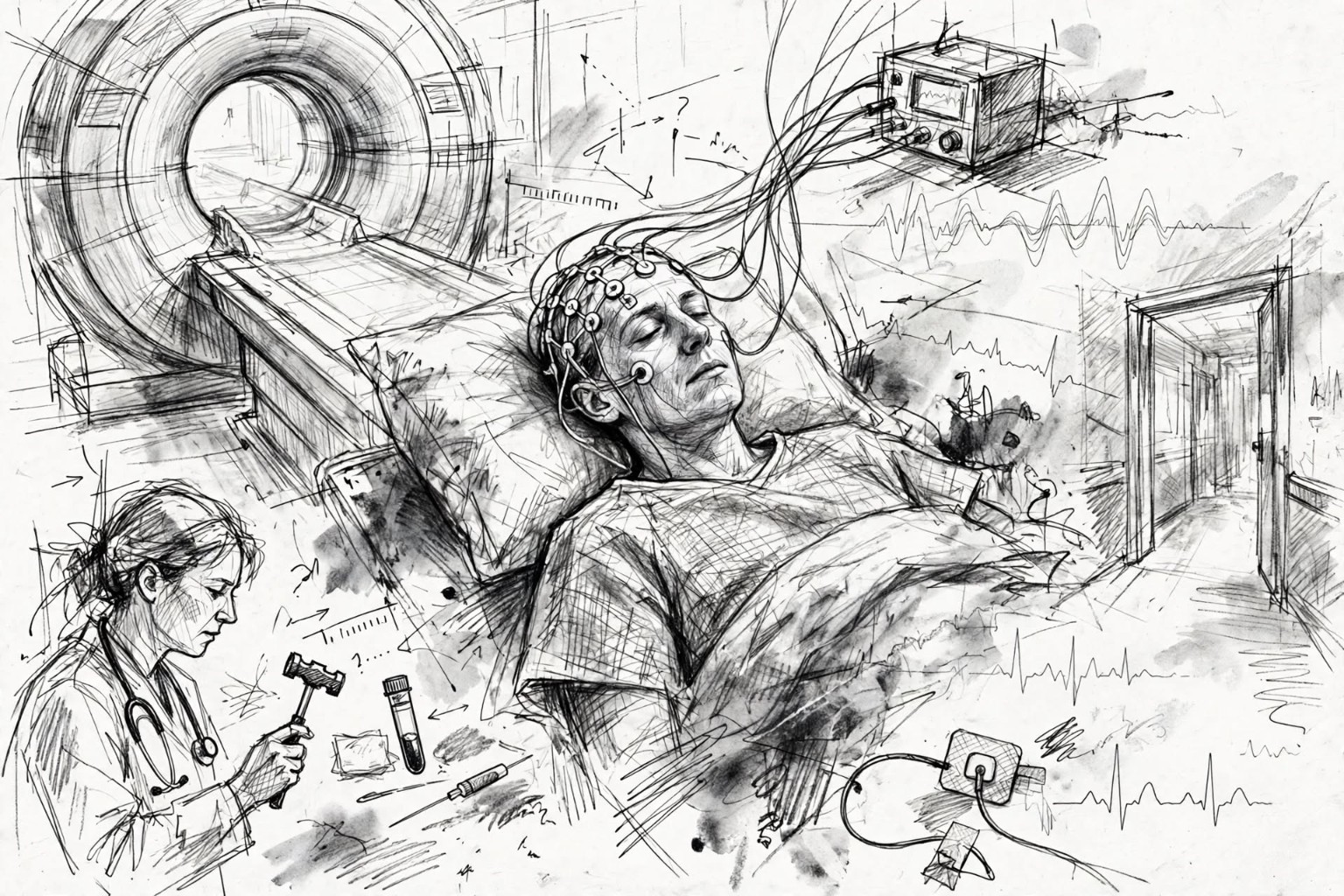
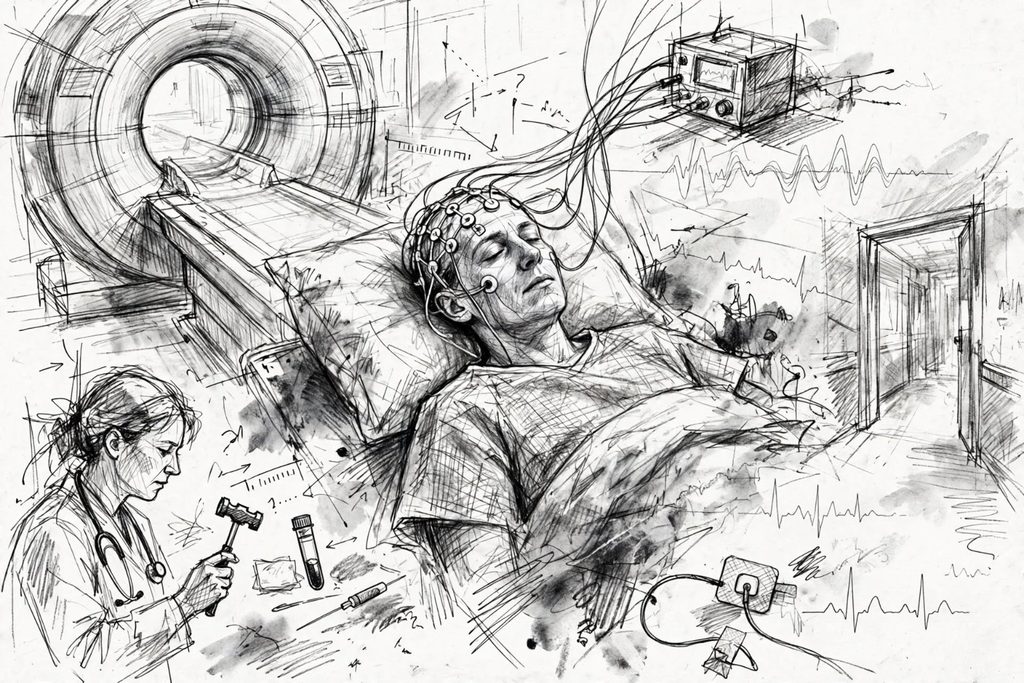
A loose, expressive sketch capturing the fragmented experience of epilepsy testing in hospital. A central patient undergoing EEG monitoring is surrounded by impressions of an MRI scanner, neurological examination, blood testing, monitoring equipment and an empty hospital corridor. Broken pencil lines, unfinished details and overlapping medical imagery reflect the uncertainty, repetition and search for answers that can come with epilepsy investigations.
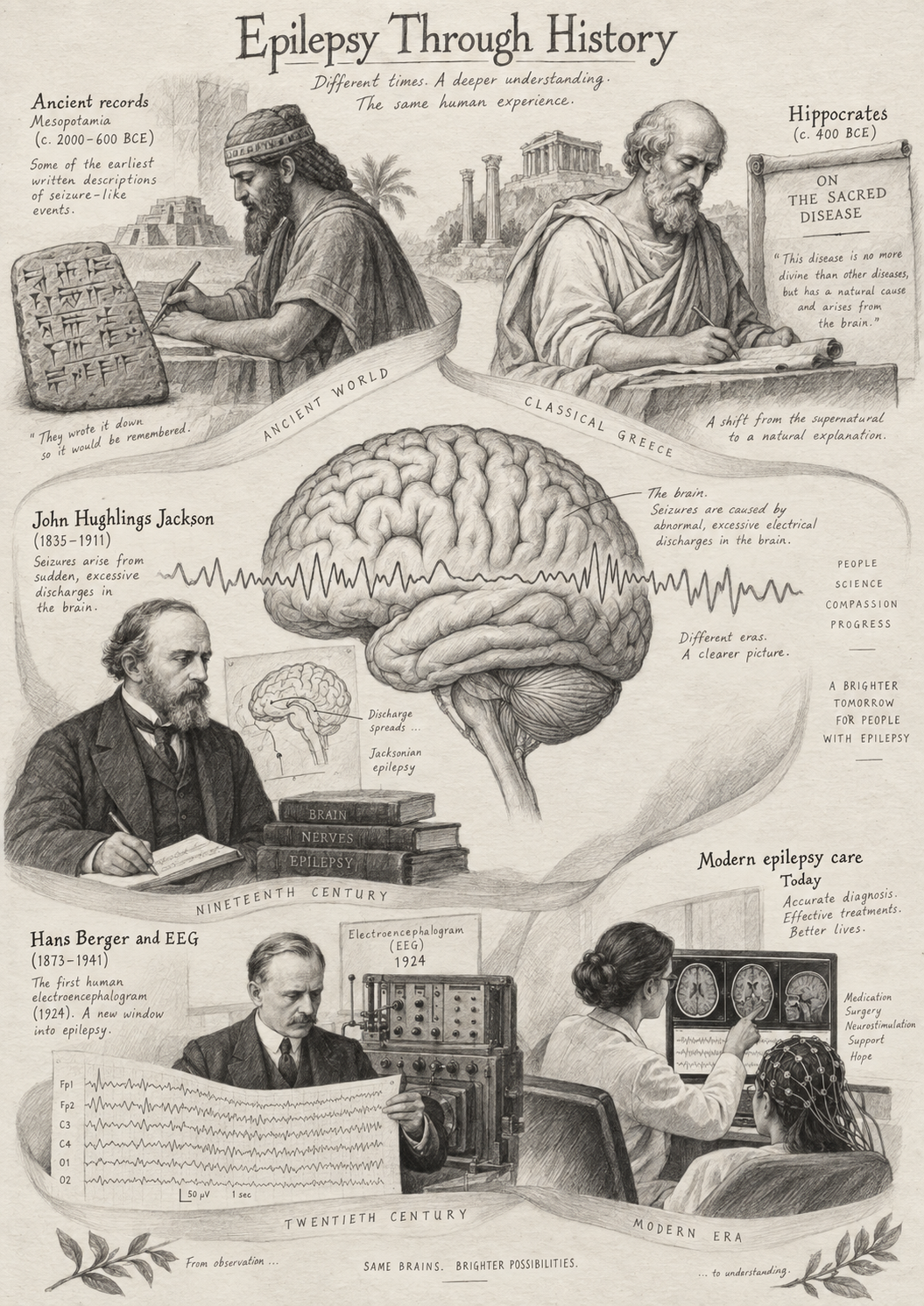
Artwork by Stephanie Adams
This artwork traces changing ways people have understood epilepsy across time, moving from ancient records and early medical thinking through major developments in neurology, EEG and modern care.
It is an artistic visual timeline rather than a historical reference page. The people, periods and ideas shown are used to represent turning points in understanding, while the detailed historical evidence, context and sources are kept separately in the site’s researched history section.
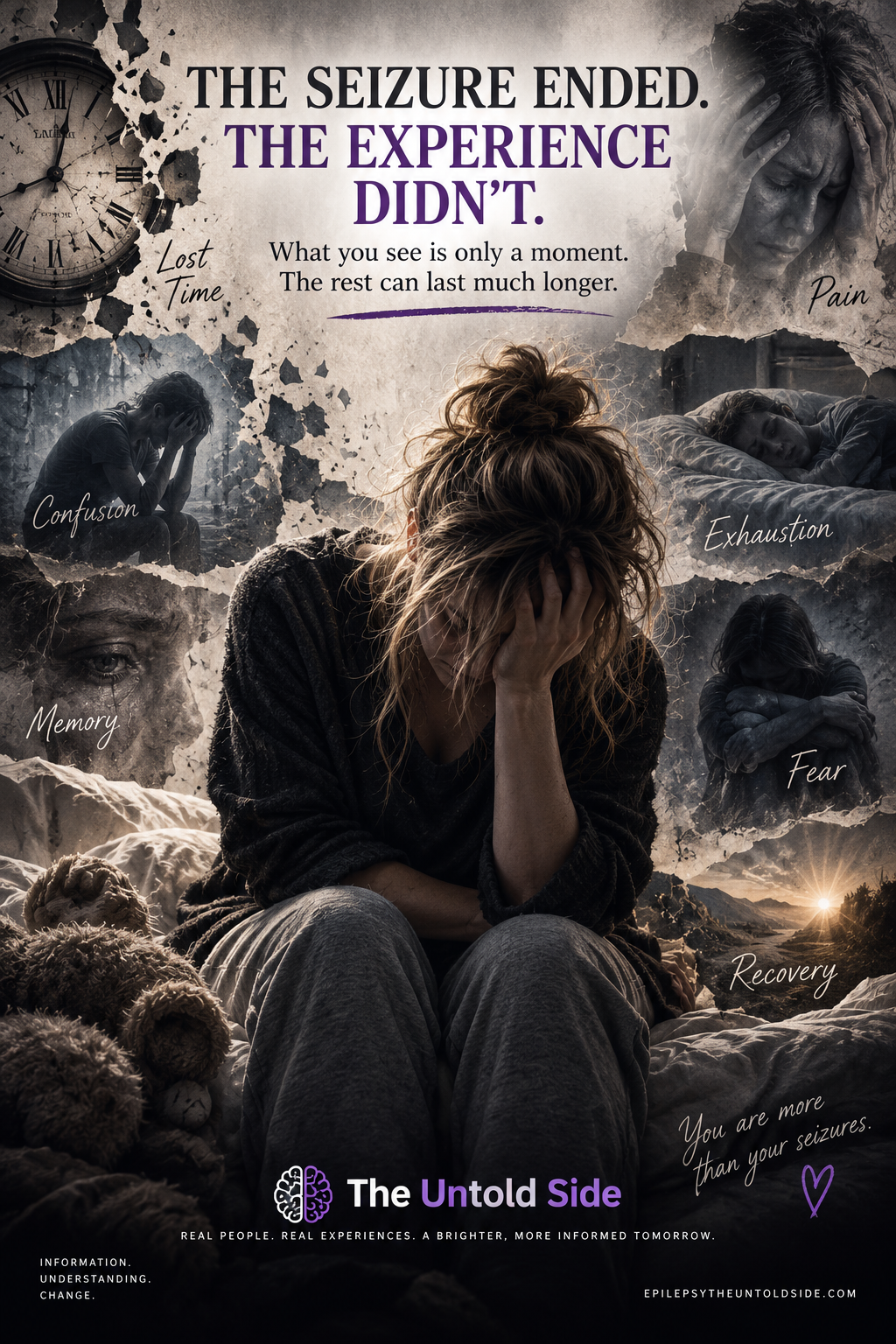
A seizure can be measured in seconds or minutes. Recovery cannot always be measured so neatly. For some people, what follows can include confusion, exhaustion, pain, memory gaps, fear, emotional changes and a need to sleep. Recovery may take minutes, hours or sometimes longer, depending on the person and the seizure. This artwork represents the part that often happens after witnesses think the seizure is over — the part that may never appear on a stopwatch. The seizure ended. The experience didn’t.